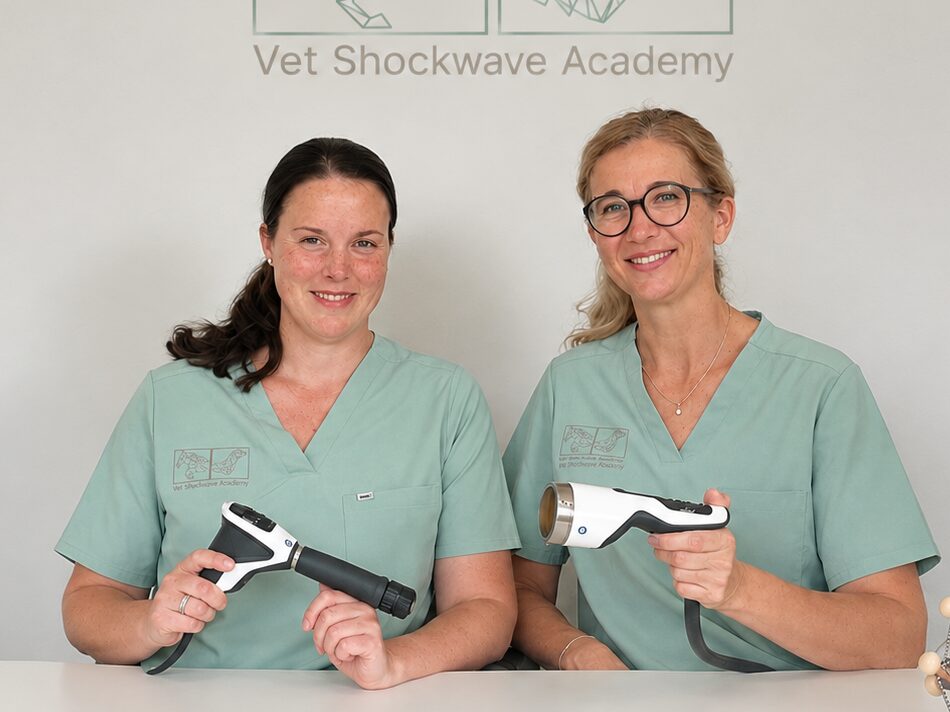
Fundamentals of veterinary Extracorporeal Shockwave Therapy
Device Technology, Evidence-Based Mechanisms of Action, Current Research and Clinical Indications
Online course series · Starting early 2027
To make full use of the potential of this therapy, it is worth engaging with the fundamentals of extracorporeal shockwave therapy, the devices and the treatment strategies. Learn from our fascination and passion for regenerative medicine, and benefit from it.
Secure your placeThe courses are in production. Sign up and you will be among the first to hear when they open.
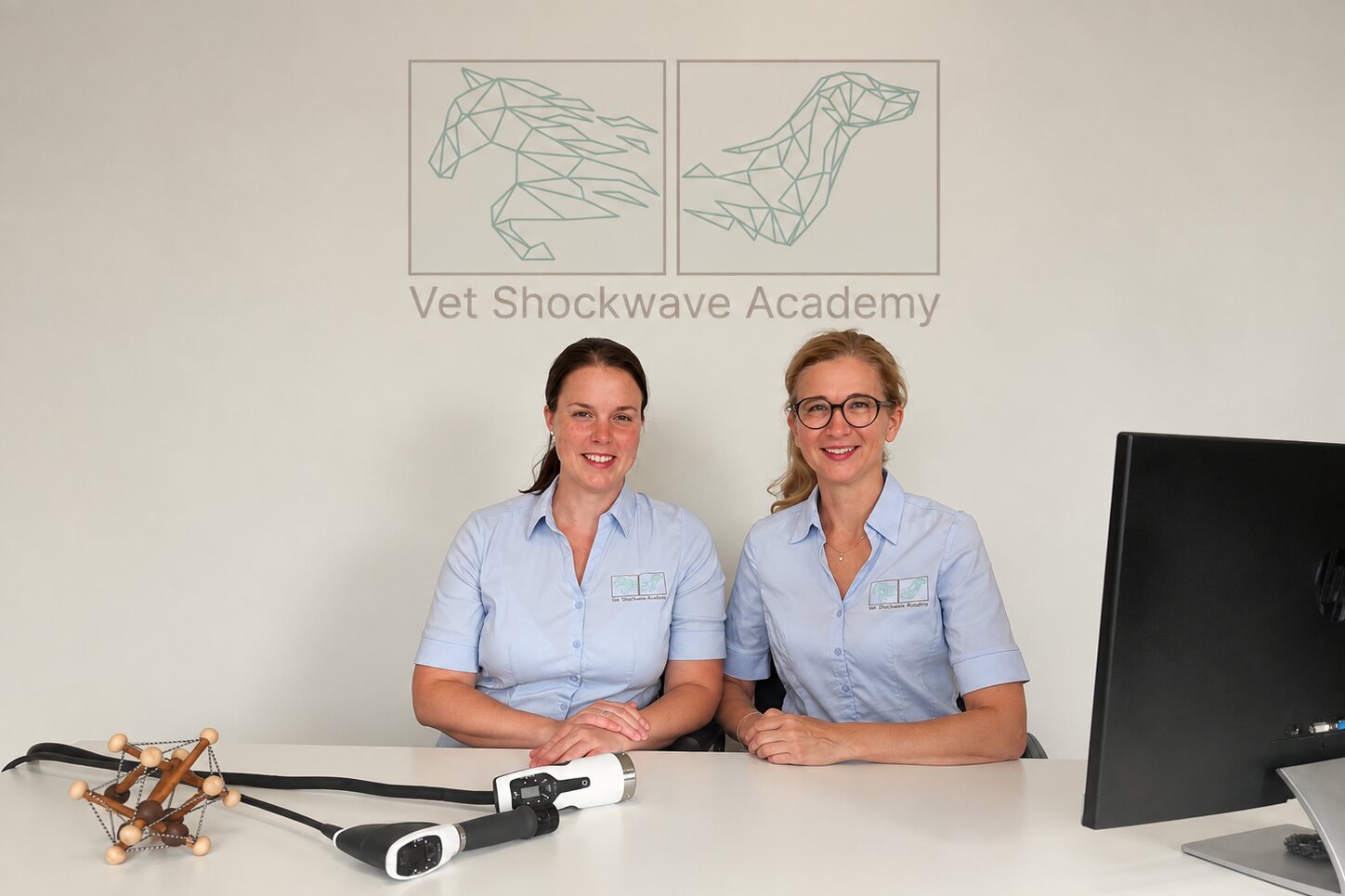
Dr Karen Barker-Benfield and Dr Elisabeth Binder, both Specialist Veterinarians in Physiotherapy and Rehabilitation Medicine and founders of the Austrian Academy for Veterinary Physiotherapy and Rehabilitation.
Voices from the courses
Quotes translated from the German originals.
I have been working successfully with radial shockwave for a long time. Even so, the course showed me many new indications and applications. Since then I use it even more often and more specifically, and overall I work with it in a much more “global” way. An absolutely practical course that I highly recommend!
I attended the shockwave course two years ago and was thrilled. Even though I do not own a device myself, I can now judge when shockwave therapy is suitable for my patients and refer them to colleagues. The results of the treatment speak for themselves.
The shockwave course gave me an important foundation for the daily treatments in my small animal and mobile equine practice. The way shockwave therapy works was explained in a very practical way, and great therapeutic approaches were presented. Treating the myofascial system has become an important key for my patients, and I now use it in my shockwave treatments.
The training on the use of focused and radial shockwave was a great event. Very well organised, top-class speakers and, above all, relevant to practice. Since then I have been very happy to use shockwave with my orthopaedic patients, and with great success.
The shockwave course inspired me so much that I bought my own device straight afterwards. Today I can no longer imagine my practice without shockwave therapy. Being treated with shockwave myself also convinced me personally. A real asset to my practice!
What makes this training truly outstanding is how shockwave is embedded in a holistic physiotherapy concept. It does not just teach technique, but a complete understanding of how the method can be meaningfully integrated into diagnostics, rehabilitation and multimodal therapy. It is exactly this combination of science, practice and a holistic approach that makes the content so valuable. Highly recommended!
What shockwave can do
Modern shockwave therapy is an important building block of integrative, multimodal pain management and rehabilitation medicine. Its field of application ranges from the canine athlete and the sport horse to the geriatric patient, from insertion tendinopathies and osteoarthritis to neurological patients. Used well, it treats not only the lesion but also addresses the cause. And its finest form is preventive work.
How it works is what we show in the foundation course. That way, owners’ questions can also be answered confidently and on the basis of evidence.
A closer look
The myth
“Shockwave therapy is painful and destroys tissue.”
What is actually true
When applied correctly, treatment is only ever as intense as the individual patient allows. Its destructive reputation stems from its origins in kidney stone lithotripsy. Since then, devices have been developed further and settings refined and thoroughly researched, and current science refutes that idea.
The myth
“Patients always have to be sedated because it is so painful.”
What is actually true
Patient-optimised dosing and global treatment strategies tend to send patients to sleep out of comfort instead. Sedation takes away valuable effects, and we explain which ones in the courses.
The myth
“A shockwave is a shockwave.”
What is actually true
Radial and focused shockwaves are not only different devices, they also rely on different physical mechanisms of action and have their own indications. The two methods can be combined to good effect, and we show how in the courses.
The myth
“Shockwave therapy is applied only at the lesion.”
What is actually true
The lesion is of course treated as well, just not on its own. Studies show how effective global treatment strategies are. Myofascial chains are often the decisive key to lasting success.
A series that keeps growing
We start with these five modules in early 2027. Production continues after that, with further courses added on an ongoing basis.
Device Technology, Evidence-Based Mechanisms of Action, Current Research and Clinical Indications
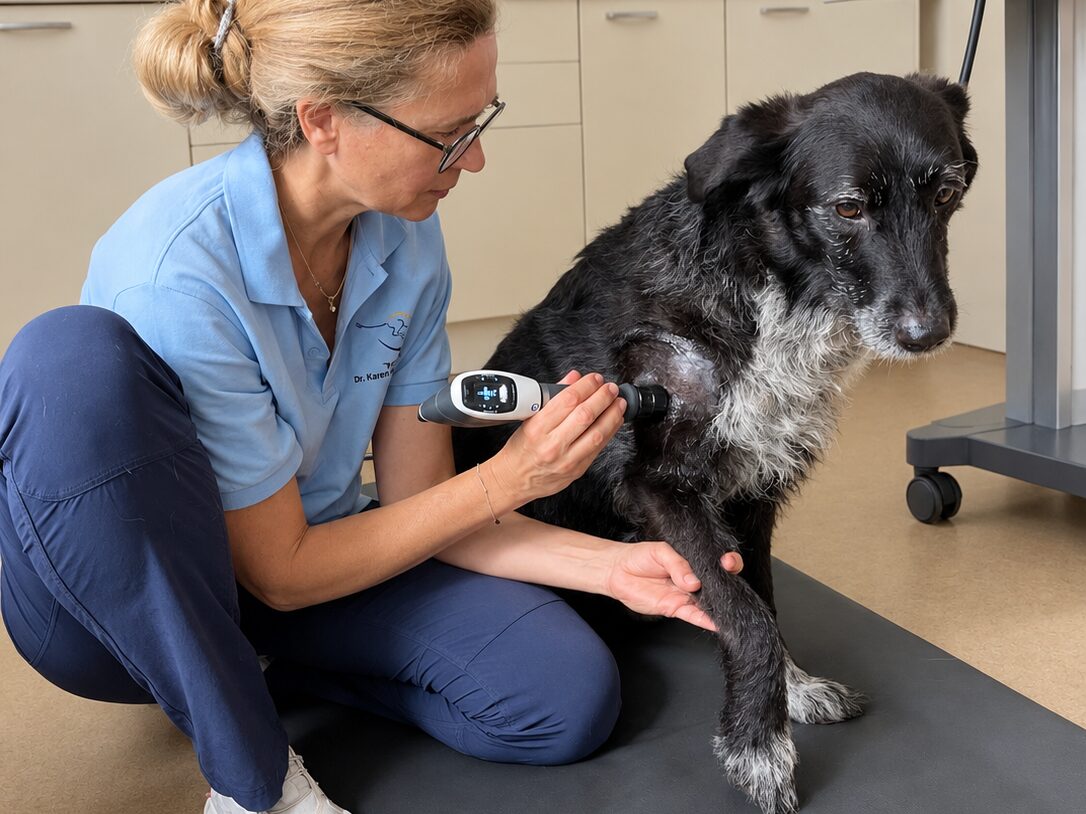
Global Treatment Strategies from the Lesion to the Myofascial Chains combined with Regenerative Medicine
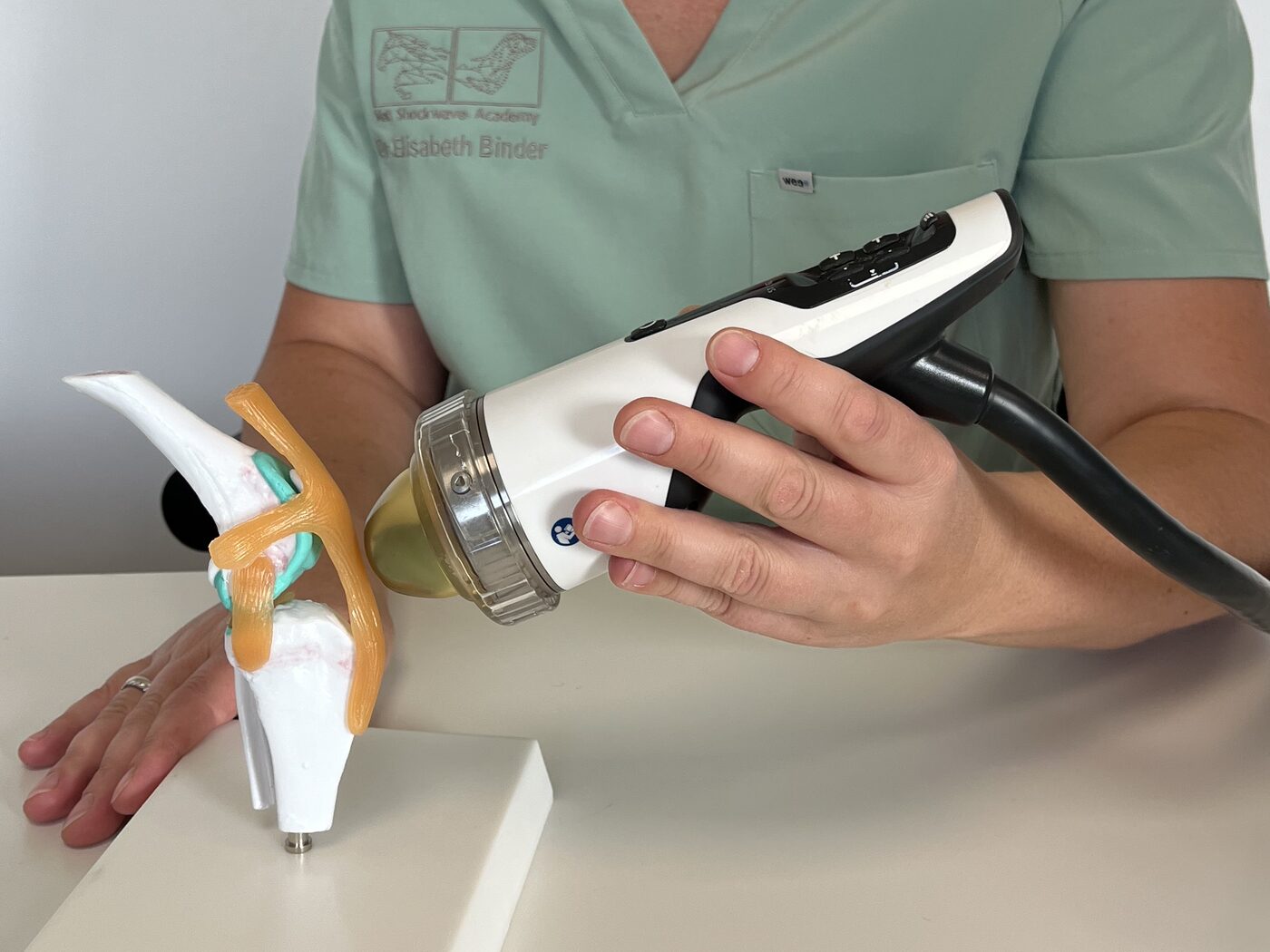
Sustainable global application of ESWT combined with therapeutic exercises
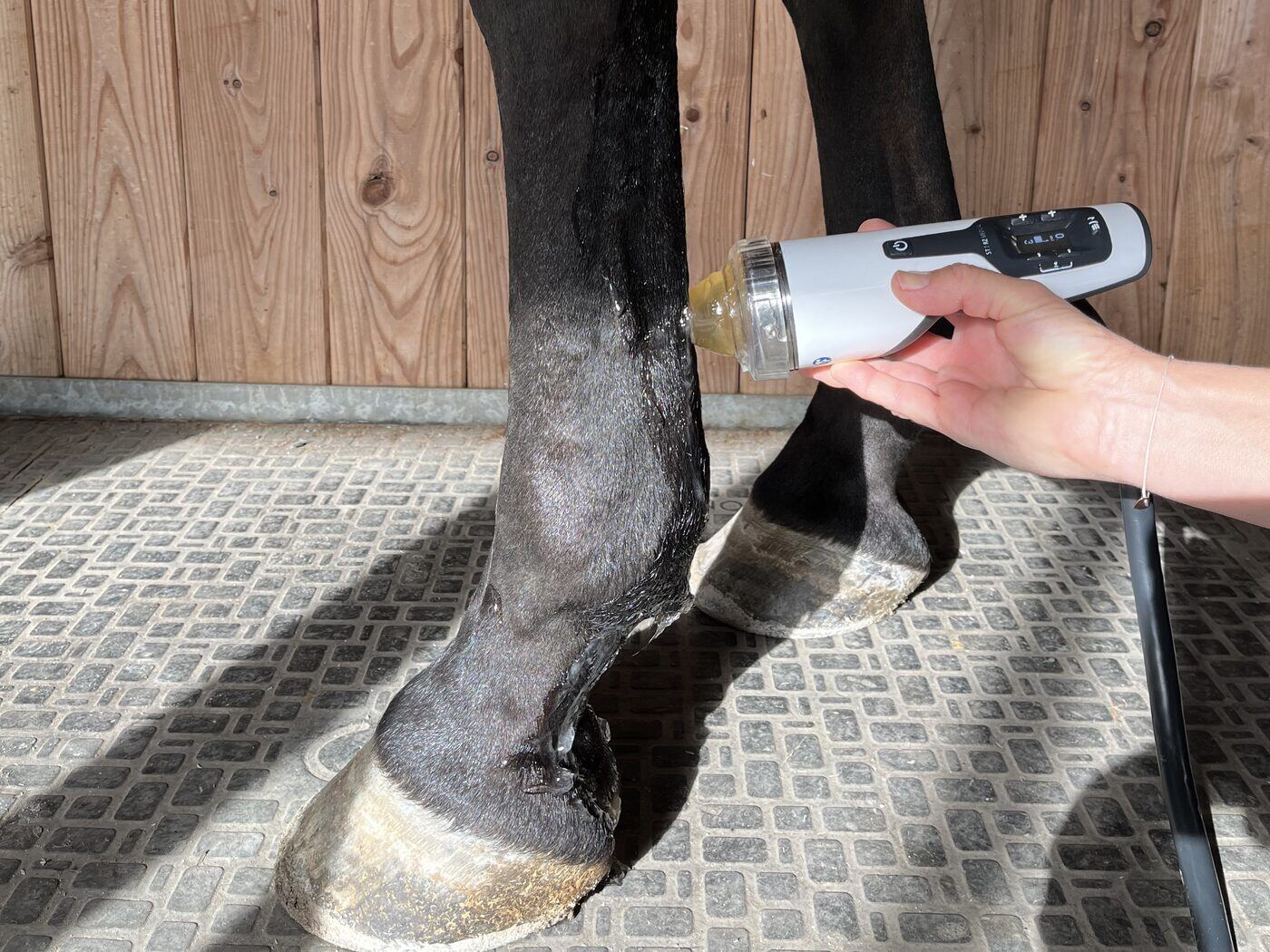
Sustainable and Evidence-Based Application of ESWT in combination with Regenerative Medicine
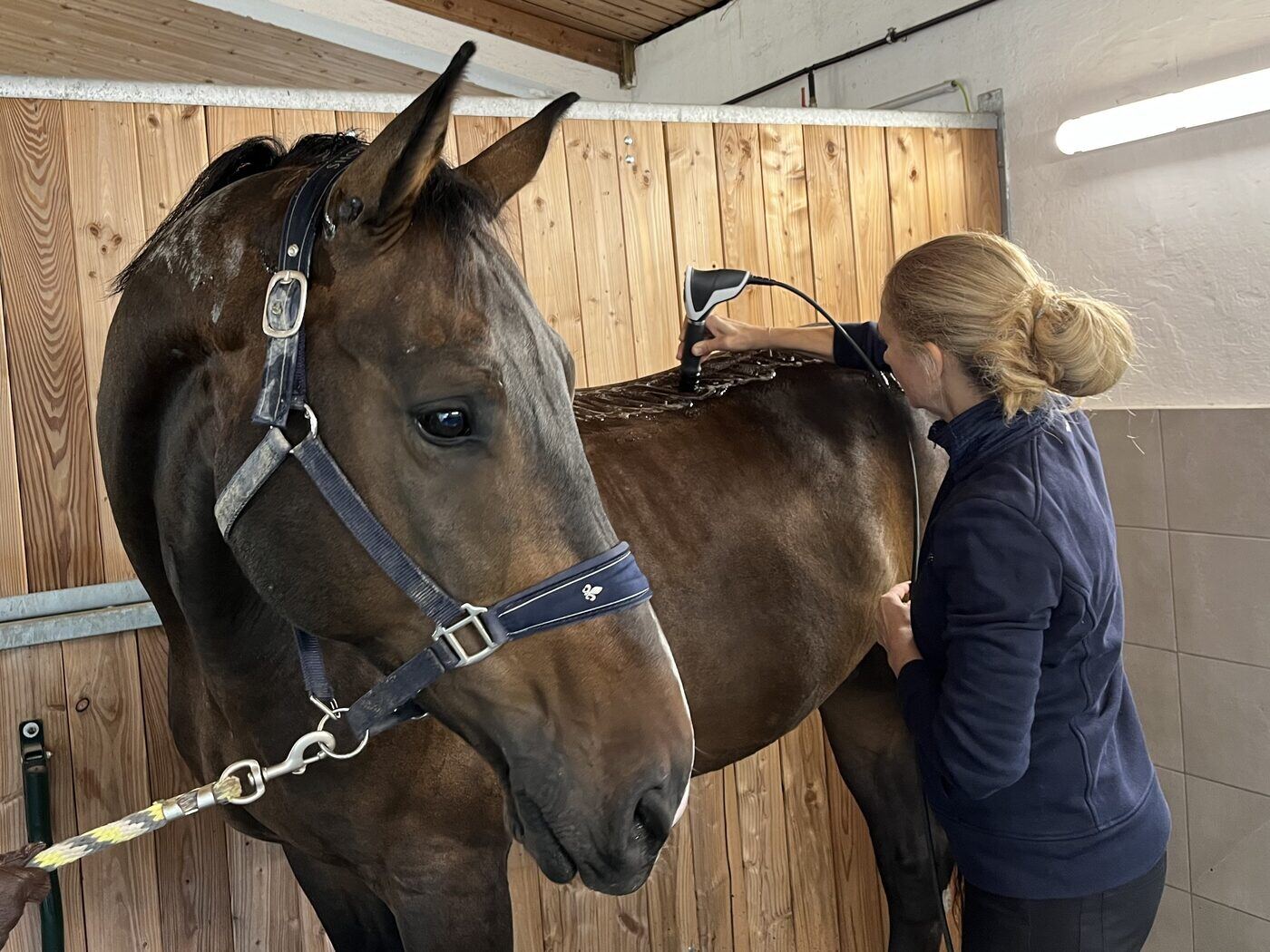
Extracorporeal Shockwave Therapy in combination with therapeutic exercises
Included in your access
No day lost, no journey, no hotel, no particular device. And you watch the sequence again before the patient is on the table.
An in-person seminar can be just as good in content. It simply comes with two days of a closed practice and a journey, and those land on the cost side rather than the benefit side.
Who teaches
Karen and Elisabeth do not teach what they have read. They teach what inspired them, what they have under their hands every day and which treatment strategies fascinate them.
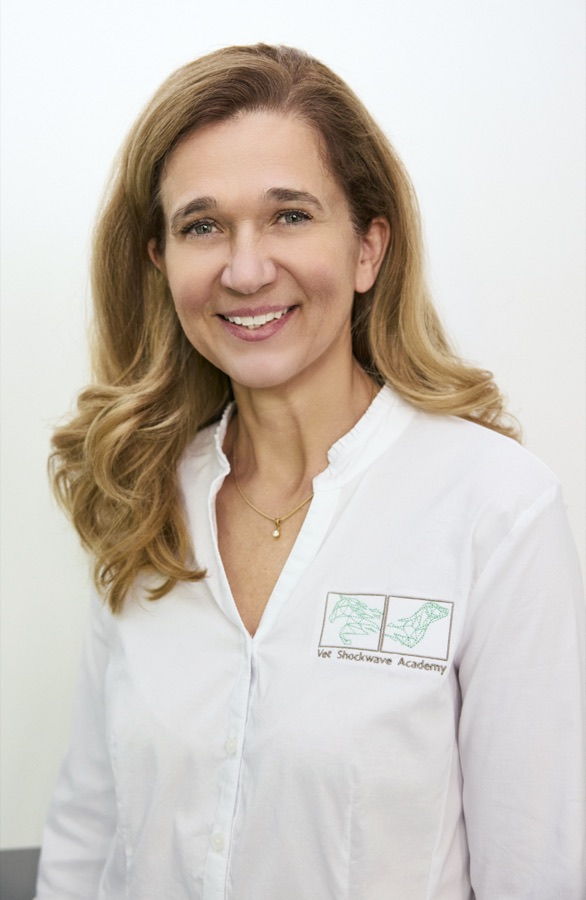
Specialist Veterinarian in Physiotherapy and Rehabilitation Medicine · CCRP · CERP
Certified Canine and Equine Rehabilitation Practitioner, trained in Tennessee. Has run one of the most advanced small animal rehabilitation practices since 2007 and looks after horses competing up to Olympic level.
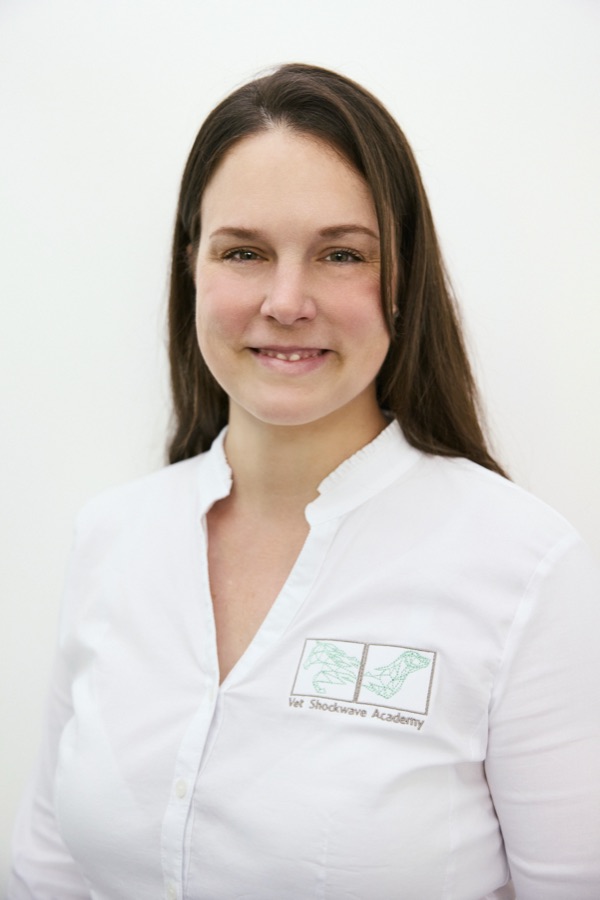
Specialist Veterinarian in Physiotherapy and Rehabilitation Medicine · CERT
Certified Equine Rehabilitation Therapist, trained in Florida. Has been treating horses and small animals since 2018, with a focus on chiropractic, acupuncture and rehabilitation medicine.
In 2019 the two of them founded the Austrian Academy for Veterinary Physiotherapy and Rehabilitation together.
Still open?
We will announce the prices together with the starting date. Anyone on the list hears both first and can then decide at their leisure.
Filming is under way, and the first modules are planned to start in early 2027. Anyone on the list will be the first to get the exact date.
An application is being made for education hours with the Austrian Chamber of Veterinary Surgeons. Certificates for chambers in other countries are gladly issued on request.
Yes. Some colleagues join for exactly that reason: to understand beforehand what the method can do, which patients it is worth using on and what matters when buying a device. The content is device-independent: it is about physics, indication and treatment structure, not about a particular make.
“Anyone who stops learning is old, whether at twenty or eighty. Anyone who keeps learning stays young.” (Henry Ford)
Let us stay young, let us keep learning, and we will supply the current state of research.
Wait list
As soon as the courses are available, you will hear from us.